20 Inch Carry-On Luggage
A 20 inch carry-on is a suitcase named for a body about 20 inches tall, and the number usually describes the shell, not the whole case. Wheels and handle housing sit outside that measurement, so a 20 inch suitcase can measure well over 22 inches once it stands on its wheels. When you shop for 20 inch carry on luggage, read past the name to the overall dimensions.
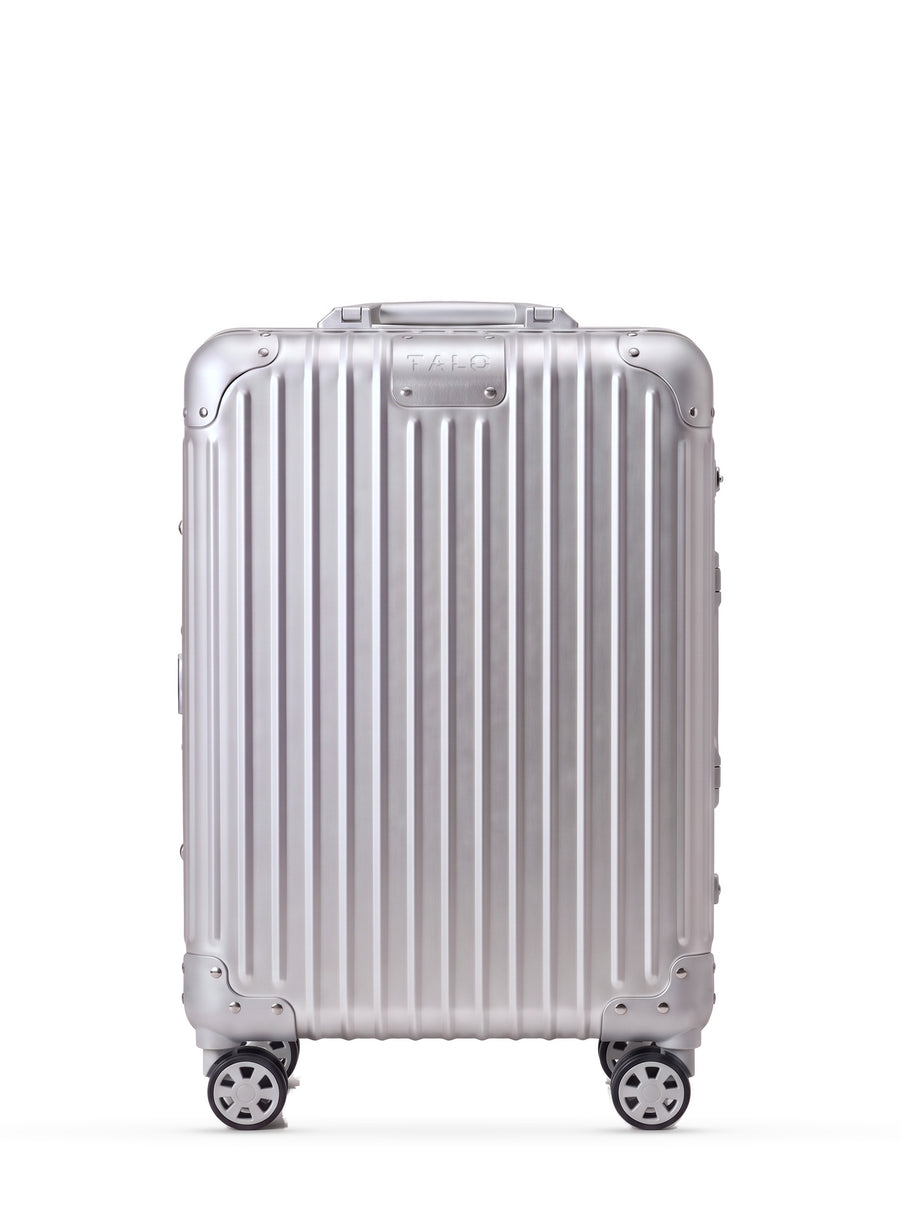
Our own case is a clear example. The Cabin's shell is 20 inches tall without wheels, which is where its name comes from. With the wheels, the full case measures 22.6 x 15.4 x 8.3 in (57.3 x 39.2 x 21 cm), and it weighs 8.36 lb (3.79 kg) empty. Compare those numbers with your airline's current limits before you fly.
The Cabin is a ribbed anodized aluminum carry-on at $379 with TSA-approved frame latches and no zippers. Below is how 20 inch sizing works and what to check before you buy.
-
 Carry-On Luggage
The Cabin
$379Ribbed anodized aluminum, TSA frame latches, no zippers, silent spinner wheels. Engraved plate. Lifetime service.
View The Cabin
On this page
What to look for in a 20 inch carry-on
What the 20 inches measures
There is no industry rule for size names. Brands usually name a case after its shell or body height, the part you pack, and leave out the wheels, the handle housing, and any feet or bumpers. That is why two cases sold as 20 inch can differ in overall height by an inch or more, and why a 20 inch case from one brand and a 22 inch case from another can end up close in real size. Look for dimensions marked overall or with wheels. If a listing gives only one set of numbers, ask which one it is.
All three dimensions
Height gets the attention, but width and depth count too. The standard US domestic carry-on limit is 22 x 14 x 9 in (56 x 36 x 23 cm), wheels and handles included, at American, Delta, United, Alaska, JetBlue, and Hawaiian. Southwest and Frontier allow 24 x 16 x 10 in, and Spirit allows 22 x 18 x 10 in. The IATA guideline is 115 cm, or 45 linear inches, in total. Allowances change, and the airline's own site is the final word. Our carry-on size guide keeps the published numbers in one place.
Rigid or expandable
An expandable case grows an inch or two when you unzip the gusset, and an expanded case is measured as it is. A rigid frame case has one size, and it never changes between the outbound leg and the return.
Empty weight
Most US majors publish no domestic carry-on weight limit. International carriers commonly cap cabin bags at 7 to 12 kg (15 to 26 lb) including the case, so the empty weight comes straight out of what you can pack. Soft-shell and polycarbonate cases weigh less than aluminum. The big-name aluminum carry-ons weigh 9 to 13 lb.
Wheels and handle
Four spinner wheels let a case roll upright beside you down a narrow aisle, and they are also the part that adds the most height below the shell. A telescoping handle should lock at more than one height and have no play when extended.
Measure it at home
When a case arrives, stand it on its wheels with the handle collapsed and measure from the floor to the highest point, then the widest point and the deepest point, including wheels, feet, and side handles. Those three numbers are the ones airlines use. A seller with a real return window lets you do this before a case ever travels.
Size name against real size
| Figure | What it includes | The Cabin | Why it matters |
|---|---|---|---|
| Size name | Varies by brand, usually the shell | 20 inch | Compares cases within one brand |
| Shell height | The body, without wheels | 20 in | Where the name comes from |
| Overall size | Wheels, handles, and feet included | 22.6 x 15.4 x 8.3 in (57.3 x 39.2 x 21 cm) | What airlines measure |
| Empty weight | The case with nothing packed | 8.36 lb (3.79 kg) | Counts toward any weight cap |
Only the overall size is worth comparing across brands or against an airline's published limit. A size name is a label.
How the Cabin fits
The Cabin is TALO's only case, and its name follows the usual convention: the shell is 20 inches tall without wheels. It is a 20 inch carry-on that measures 22.6 x 15.4 x 8.3 in (57.3 x 39.2 x 21 cm) with wheels and weighs 8.36 lb empty, lighter than the big-name aluminum carry-ons. It is a rigid frame case with no expansion and no zipper, so the size on the product page is its size on every trip.
The shell is ribbed anodized aluminum. It closes with TSA-approved frame latches, rolls on four silent spinner wheels, and extends on a machined aluminum telescoping handle. The only branding is an engraved aluminum plate, 48 x 13 mm, riveted to the shell. It is $379 with free tracked shipping in the contiguous US and 60-day returns, so you can measure it at home before it ever travels, and lifetime service covers the wheels, latches, handles, and telescoping trolley. See The Cabin for photos and the size chart.
For the 22 x 14 x 9 standard in detail, see 22 inch carry-on luggage. For compact cases more broadly, see small suitcases.
Common questions
What does 20 inch mean on a carry-on?
It is a size name, and it usually refers to the height of the shell or body without wheels. Brands do not follow one rule, so check the overall dimensions, which include wheels and handles. The Cabin's shell is 20 inches tall, and the full case is 22.6 inches tall.
How tall is a 20 inch suitcase with wheels?
It depends on the wheels and the handle housing, which is why the name alone cannot tell you. The Cabin has a 20 inch shell and measures 22.6 inches tall overall with its wheels. Other cases add more or less, so read the overall height on each listing.
Is a 20 inch suitcase a carry-on?
Most are sold as carry-ons, but the name is not what the airline checks. Airlines measure the whole case, wheels and handles included, against their own published limits, and those limits change. Compare the overall dimensions with your airline's current limits before you fly, and see suitcase sizes explained for how the size classes work.
What is the difference between a 20 inch and a 22 inch carry-on?
On paper, two inches of shell height. In practice, it depends on how each brand measures. A 22 inch case named for its overall size and a 20 inch case named for its shell can be close in real size, so compare overall dimensions rather than names.
How much does a 20 inch carry-on weigh?
It depends on the material. Soft-shell and polycarbonate cases weigh less than aluminum, and the big-name aluminum carry-ons publish 9 to 13 lb. The Cabin weighs 8.36 lb (3.79 kg) empty, according to the supplier specification.


