Small Suitcase
A small suitcase is a case sized for the cabin rather than the hold. In practice the term covers three classes: the full carry-on that goes in the overhead bin, the underseat case that fits beneath the seat in front of you, and the personal item, which is usually a bag rather than a suitcase. Most people searching for a small suitcase want the first one: a compact, wheeled case that clears airline limits and handles a few days away without checking anything.
Buying small is a decision about discipline more than size. The right small suitcase clears the sizer on the airlines you fly, closes securely, and rolls well. You accept that it holds less than a checked bag in exchange for never waiting at a carousel or paying a bag fee.
TALO makes one small suitcase. The Cabin is a ribbed anodized aluminum carry-on with TSA-approved frame latches and no zippers, built to standard cabin sizing for major US airlines, at $379. The case is below. The rest of this page explains what small actually means, when it is the right buy, and where it honestly falls short.
-
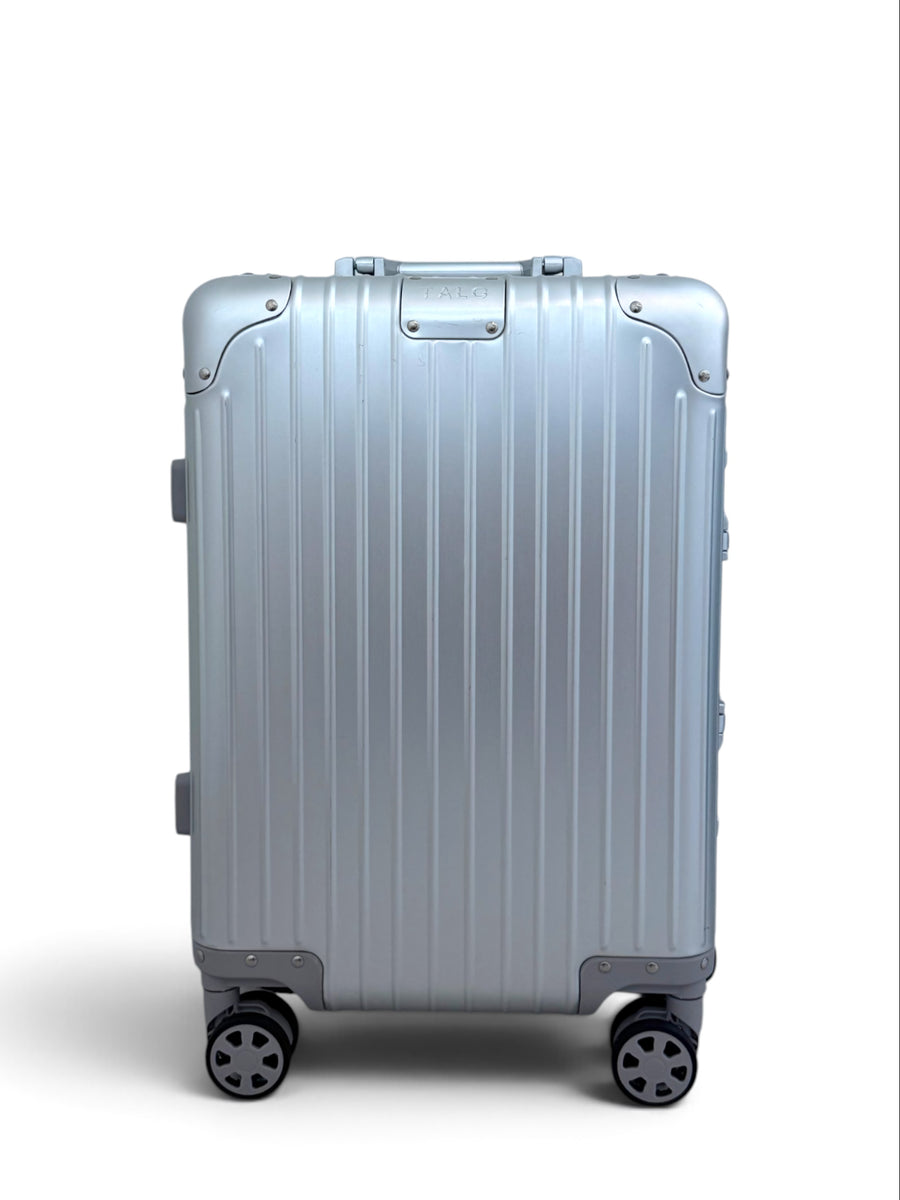 Carry-On Luggage
The Cabin
$379Ribbed anodized aluminum, TSA frame latches, no zippers, silent spinner wheels. Engraved plate. Lifetime service.
View The Cabin
On this page
What small means in luggage
Luggage sizes are defined by where the bag travels, not by a number on the tag. The table sets the three small classes against the smallest checked size.
| Class | Where it goes | Typical trip | Airline rule |
|---|---|---|---|
| Personal item | Under the seat | Day trip, overnight | Airline specific, smaller than carry-on |
| Underseat suitcase | Under the seat | 1 to 2 nights | Must fit the personal item limit |
| Cabin carry-on | Overhead bin | 2 to 7 nights | 22 x 14 x 9 in on most US majors |
| Medium checked | Cargo hold | 1 to 2 weeks | Checked, fees apply |
The cabin carry-on is the sweet spot. It is the largest case you can bring without checking, and on most US majors that is 22 x 14 x 9 in with wheels and handles included. Southwest and Frontier allow 24 x 16 x 10 in and Spirit allows 22 x 18 x 10 in, but buying to the smaller standard keeps you safe on every carrier. Allowances change and the airline's site is the final word. Suitcase sizes explained covers every class in detail, and personal item versus carry-on settles the underseat question.
When a small suitcase is the right buy
Short trips. Two to five nights is where a small suitcase is no compromise. A carry-on holds a working wardrobe for that length comfortably, and everything you own stays with you.
One-bag travel. If you have ever waited forty minutes at a carousel or lost a bag on a connection, you already understand the appeal. One small suitcase means walking off the plane and out the door.
Airlines with strict limits. Budget carriers, regional jets, and many international airlines run tighter size and weight rules than the US majors. A small suitcase bought to the 22 x 14 x 9 standard clears far more of them than a case built to the biggest allowance you could find.
Frequent flyers. If you travel every few weeks, the small suitcase is the one that gets used. It should be the best-built piece of luggage you own, not the afterthought that came in a set.
What to look for in a small suitcase
Size class
Decide first whether you need underseat or overhead. Underseat cases are smaller than they look and suit one or two nights at most. For anything longer, buy a full cabin carry-on measured to 22 x 14 x 9 in including wheels and handles.
Shell
Soft shells compress and offer pockets. Polycarbonate is light and affordable but zippered and prone to cracking with age. Aluminum is heavier and costs more, but dents rather than cracks and closes with a rigid latched frame. For a case that gets lifted into bins several times a month, structure matters.
Closure
Because a small suitcase gets packed full every time, the closure takes the most strain. Zippers burst under that pressure. Frame latches close when the contents fit and never split.
Wheels
Four-wheel spinners glide upright through airports and down aisles, which is where a cabin case spends its life. Look for wheels that run quiet and can be repaired.
Handle
You will extend and collapse the handle dozens of times per trip. A machined aluminum telescoping handle with no wobble at full height outlasts stamped tubes.
Warranty
Small suitcases get used more than any other size, so the wear parts fail sooner. A program that repairs wheels, latches, and handles for the life of the case is worth more here than anywhere else.
The honest tradeoff: capacity
A small suitcase holds less. That is the whole deal. It will not carry two weeks of clothes or winter boots for a family. Packing cubes, rolling instead of folding, and wearing the heaviest layer on the plane stretch a cabin case further than most people expect, and how to pack a carry-on walks through the system. If your trips regularly need more than that, buy a checked bag for those trips and keep the small suitcase for the rest. You do not need a set to do that; see one case versus a luggage set.
How the Cabin fits
The Cabin is TALO's only case, and it is a small suitcase in the cabin carry-on class. It has a ribbed anodized aluminum shell, TSA-approved frame latches with no zippers, silent four-wheel spinners, and a machined aluminum telescoping handle. The only branding is an engraved aluminum plate, 48 x 13 mm, riveted to the shell. It is built to standard cabin sizing for major US airlines.
It costs $379 with free tracked shipping in the contiguous US and 14-day returns, and wheels, latches, handles, and the telescoping trolley are repaired, not replaced, for the life of the case under lifetime service. It is not an underseat case, and it is not the lightest small suitcase you can buy; polycarbonate wins on weight. It is the one you buy once. See The Cabin, or compare the wider carry-on luggage and luggage pages.
Common questions
What size is a small suitcase?
In airline terms, small means cabin size. On most US majors that is up to 22 x 14 x 9 in including wheels and handles. Underseat cases are smaller still and must fit the airline's personal item limit. Allowances change, so check before you fly.
Is a small suitcase the same as a carry-on?
Usually. Most small suitcases are cabin carry-ons sized for the overhead bin. The exception is the underseat suitcase, which is small enough to count as a personal item on many airlines.
How many days can a small suitcase cover?
Packed with some discipline, a cabin carry-on comfortably covers two to seven nights. Rolling clothes, using packing cubes, and wearing the bulkiest layer on the plane push it further.
Is a small aluminum suitcase worth it?
If you fly often and plan to keep one case for years, yes. Aluminum trades a little weight and a higher price for a latched frame, no zipper to fail, and construction that can be repaired. If you mainly want light and cheap, polycarbonate is the better small suitcase for you.


