Luggage
Luggage is the one piece of travel gear you trust with everything you bring, and the best luggage does three things well. It fits the size rules of the airlines you actually fly. It survives baggage handling without failing at a zipper, a wheel, or a handle. And when a part does wear out, it can be repaired instead of thrown away. Most of the market is built to be replaced every few years. It does not have to be.
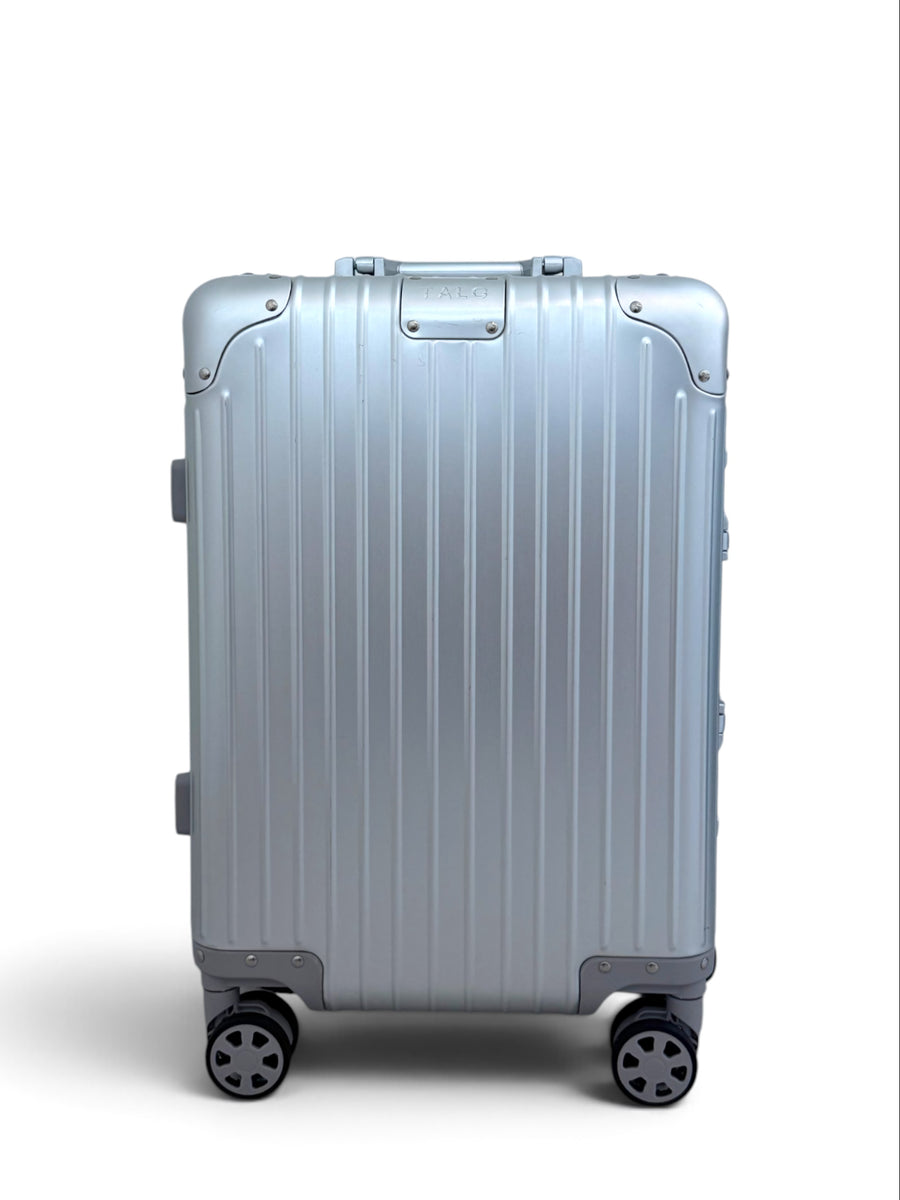
TALO takes a narrower view than most luggage brands: one case, one material, built to last. The Cabin is a ribbed anodized aluminum carry-on that closes with TSA-approved frame latches instead of zippers, priced at $379, and backed by lifetime service on the parts that wear. It is the only piece of travel luggage we make, and we would rather do one case properly than fill a catalog.
If you already know you want it, the case is right below. If you are still working out what kind of luggage you need, keep going for the categories, what to look for, and the honest tradeoffs between them.
-
 Carry-On Luggage
The Cabin
$379Ribbed anodized aluminum, TSA frame latches, no zippers, silent spinner wheels. Engraved plate. Lifetime service.
View The Cabin
On this page
Shop by category
- Carry-on luggage: cases sized for the overhead bin on major US airlines.
- Aluminum luggage: metal shells with frame latches, the only material TALO builds in.
- Aluminum carry-on: where the two above overlap, which is exactly what the Cabin is.
- Hard shell luggage: rigid cases in aluminum, polycarbonate, or ABS.
- 22 inch carry-on: the size class that matches the 22 x 14 x 9 in standard.
- Small suitcase: compact cases for short trips and airlines with strict limits.
- Spinner luggage: four-wheel cases that roll upright in any direction.
Still deciding? Our luggage guides cover sizing, materials, packing, and care without the sales pitch.
Types of luggage
The category splits two ways: by where the bag travels, and by what it is made of.
By location, there is carry-on luggage (fits the overhead bin, stays with you), checked luggage (goes in the hold, larger, subject to fees and rough handling), and luggage sets (a carry-on plus one or two checked cases sold together). Sets look like value on paper, but most people use the carry-on constantly and the big cases rarely. We make the full case for that in one case versus a luggage set.
By construction, there is soft shell (nylon or polyester over a frame, expandable and forgiving), hard shell (rigid polycarbonate, ABS, or aluminum), and within hard shell, aluminum stands apart because it closes with a latched frame rather than a zipper and can be serviced rather than replaced. Hard shell versus soft shell covers the first split, and our aluminum versus polycarbonate guide covers the second.
What to look for in luggage
Shell material
Polycarbonate is light and affordable, flexes on impact, and eventually cracks. ABS is cheaper and more brittle. Ballistic nylon is the soft-shell standard. Aluminum is heavier and costs more, but it dents instead of cracking, does not get brittle with age, and holds a rigid frame that a zippered shell cannot.
Closure
Zippers are the most common failure point on a suitcase: they burst when overpacked and can be forced open with a pen. Frame latches close only when the contents fit, and there is nothing to split. On a case you plan to keep for a decade, the closure matters more than the color.
Wheels
Four-wheel spinners roll upright beside you through airports and down aisles. Two-wheel cases tilt and pull, which is better on cobblestones and worse everywhere else. Whichever you choose, look at how the wheels are mounted and whether they can be repaired.
Handle
The telescoping handle takes more abuse than any other part. Machined aluminum stages hold up better than stamped tubes, and the handle should lock without wobble at full extension.
Size
Buy to the rule you fly under, not the biggest thing that says carry-on on the tag. The standard for most US majors is 22 x 14 x 9 in including wheels and handles. Allowances change, so the airline's site is the final word. Suitcase sizes explained maps every class from carry-on to oversize.
Warranty and service
A lifetime warranty that covers only manufacturing defects is not the same as lifetime service on the parts that wear. Read the wording. Ask whether wheels, latches, and handles get repaired, and whether that costs anything.
Luggage types compared
| Type | Best for | The tradeoff |
|---|---|---|
| Carry-on | Most trips, no bag fees, no lost bags | Capacity is fixed by the airline |
| Checked | Long trips, families, bulky gear | Fees, waiting, rough handling |
| Set | Buying everything at once | You pay for cases you rarely use |
| Soft shell | Overpackers, outside pockets | Least protection, wears fastest |
| Hard shell (plastic) | Light weight, lower price | Zippers, cracks with age |
| Aluminum | Keeping one case for years | Heavier, higher entry price |
How the Cabin fits
TALO makes one case, and it lives in the carry-on, hard shell, aluminum corner of that table. The Cabin has a ribbed anodized aluminum shell, TSA-approved frame latches with no zippers anywhere, silent four-wheel spinners, and a machined aluminum telescoping handle. The only branding is an engraved aluminum plate, 48 x 13 mm, riveted to the shell. It is built to standard cabin sizing for major US airlines.
It costs $379, with free tracked shipping in the contiguous US and 14-day returns. Wheels, latches, handles, and the telescoping trolley are covered by lifetime service: repaired, not replaced, for the life of the case. If you want checked luggage or a set, we do not make one, and we would rather say so than sell you something we did not build. If you want one carry-on that outlasts the next several you would otherwise buy, see The Cabin.
Common questions
What is the best luggage for most travelers?
For most people, one well-built carry-on covers the large majority of trips. Choose it by the airline size rule you fly under, then by closure, wheels, and whether the parts can be repaired. Buy a checked bag only when you have a specific need for one.
Should I buy a luggage set or a single case?
Buy the single case unless you regularly travel with more than one bag. Sets bundle a carry-on with checked cases that most owners use a few times a year, and the bundle price usually means each piece is built to a lower standard than a single case at the same total cost.
Is hard shell or soft shell luggage better?
Hard shell protects contents better and cleans easier. Soft shell squeezes into tight spaces and offers outside pockets. If you check bags or carry anything fragile, hard shell. If you overpack and want pockets, soft shell.
Does TALO make checked luggage or luggage sets?
No. TALO makes one aluminum carry-on, the Cabin. Everything on this site, from the guides to the service program, is built around doing that one case well.


