Hard Shell Luggage
Hard shell luggage is any suitcase with a rigid outer shell instead of fabric. The shell is molded from ABS or polycarbonate, or formed from aluminum, and it protects what is inside by keeping crushing loads off your clothes, electronics, and anything fragile. Hardside luggage also sheds rain, wipes clean, and holds its shape whether the bag is full or half empty.
When you shop for hard shell luggage, four things decide whether the case lasts: the shell material, the closure (zipper or frame latch), the wheels and handle, and whether anyone will repair it when a part wears out. Most hard shell carry on luggage is priced on looks. It should be priced on those four things.
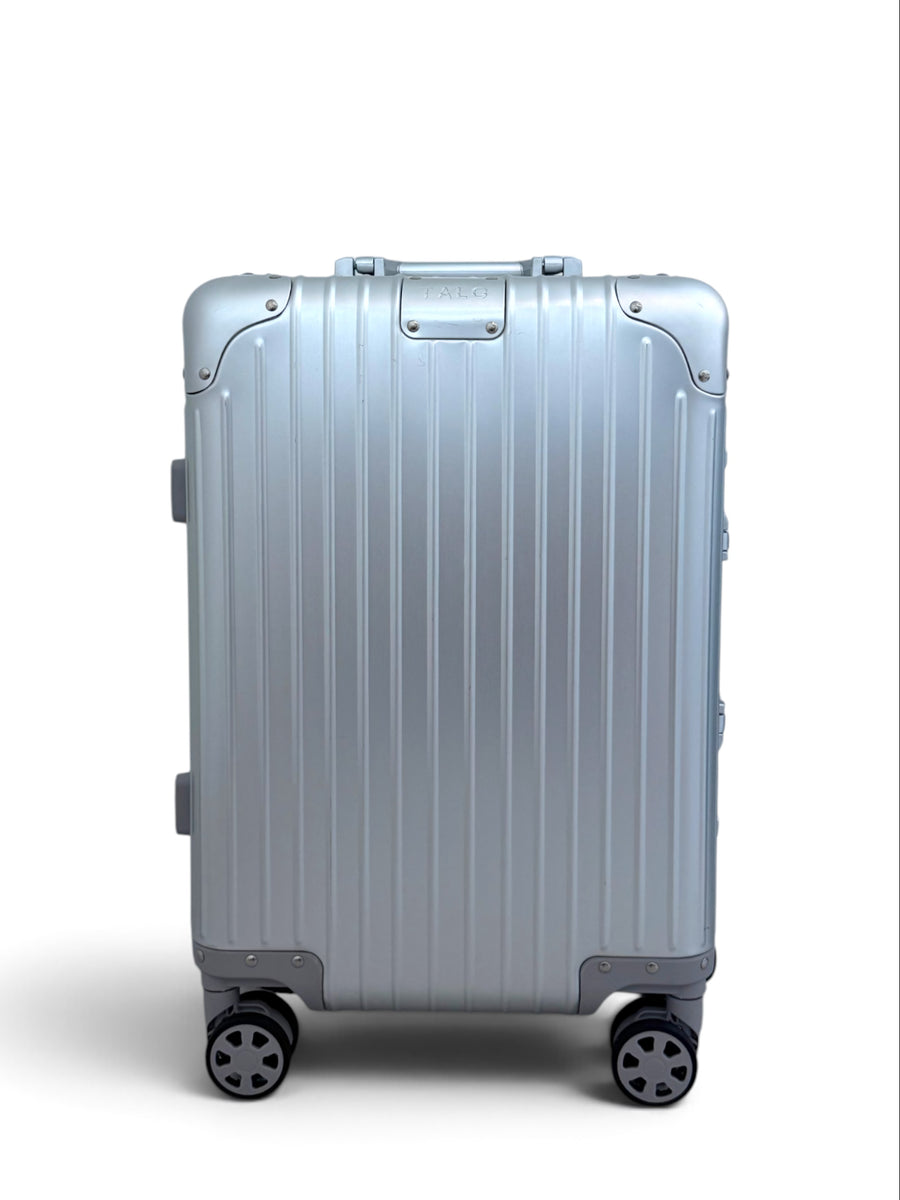
TALO makes one hard shell case, the Cabin, in ribbed anodized aluminum with frame latches and no zippers. It is built to standard cabin sizing for major US airlines and backed by lifetime service on the parts that wear. The rest of this page covers what to look for in any hardside case, so you can judge ours on the same terms.
-
 Carry-On Luggage
The Cabin
$379Ribbed anodized aluminum, TSA frame latches, no zippers, silent spinner wheels. Engraved plate. Lifetime service.
View The Cabin
On this page
What to look for in hard shell luggage
Shell material: ABS, polycarbonate, or aluminum
ABS is the cheapest hard plastic. It is light and it keeps prices low, but it is brittle, especially in a cold cargo hold. Corners crack, and once a crack starts the shell is finished. Polycarbonate is the mainstream choice. It flexes on impact and springs back, so it rarely cracks, and good polycarbonate is light. Its failure modes are scuffing, gouges from conveyor edges, and, on thin shells, permanent dents where the wall was molded too thin. Aluminum does not crack. It dents, and a dented aluminum case keeps working. It weighs more, costs more, and shows every scuff. Our aluminum vs polycarbonate guide goes deeper on both.
Closure: zipper or frame latch
Most hardside carry on cases close with a zipper. Zippers are light and cheap, and a zippered shell can often expand. They are also the most common failure point on any suitcase, and a zippered case can be opened with a ballpoint pen and closed again without a trace. Frame-latch cases close with two rigid halves and metal latches. They cannot expand, and they cost more, but there is no coil to split, no slider to jam, and a locked frame cannot be pen-opened. Read luggage without zippers for the full argument on both sides.
Wheels and handle
On any hard shell case, wheels and the telescoping handle break long before the shell does. Look for four spinner wheels with rubberized treads and a visible screw or rivet mount, which means they can be replaced. Extend the handle fully and push it sideways. Wobble is normal; rattle and play at the base mean the tubes are thin. Ask whether the brand sells replacement wheels and handles, because "lifetime warranty" often excludes exactly these parts.
Corners and edges
Corners take every impact. On plastic shells, look for thicker molded corners or added corner guards. On aluminum, look for a formed edge or ribbing, which stiffens the panel so a knock spreads across the surface instead of punching a sharp dent.
Size and airline fit
Hard shells do not squish into a bin. Whatever the case measures is what the sizer at the gate will measure, wheels and handle included. Buy to the strictest airline you fly. Our carry-on size guide lists the current published limits.
Service after the sale
A hard shell case is a ten-year purchase if the parts that wear can be repaired. Check the warranty for what is actually covered (wheels, handles, latches) versus what is excluded (almost always cosmetic wear, and often "airline damage").
Hard shell materials side by side
| Factor | ABS | Polycarbonate | Aluminum |
|---|---|---|---|
| Weight | Light | Light | Heaviest |
| Impact | Cracks, worse in cold | Flexes, rarely cracks | Dents, keeps working |
| Usual closure | Zipper | Zipper, some frame | Frame latches |
| Shows wear | Scuffs and cracks | Scuffs | Scuffs and dents |
| Typical price | Lowest | Middle | Highest |
| Serviceable for years | Rarely | Sometimes | Usually |
What breaks first on hard shell cases
In rough order: zippers, then wheels, then the telescoping handle, then corners. Zippers fail by coil separation and slider wear, usually from overpacking. Wheels lose treads, seize on grit, or shear at the mount. Handles develop play in the tubes and then stick or refuse to lock. Corners crack on ABS and thin polycarbonate after a hard drop. If you buy a case with no zipper, replaceable wheels, and a serviceable handle, you have removed most of the ways a hard shell dies.
How to judge quality in a store
- Press the shell with your palm. Deep flex on plastic means a thin wall.
- Extend the handle, lock it, and push it sideways. Listen for rattle.
- Roll it on the floor. Silence and smooth tracking are good signs. Clatter is not.
- Open and close the case five times. Zipper sliders should glide, latches should snap without force.
- Flip it over and look at wheel mounts. Screws or rivets mean serviceable. Molded-in means disposable.
- Read the warranty card for the exclusions, not the headline years.
How the Cabin fits
The TALO Cabin is a hard shell carry on in ribbed anodized aluminum, priced at $379. It closes with TSA-approved frame latches and has no zippers anywhere. The ribbing stiffens each panel so knocks spread across the surface. It rolls on silent four-wheel spinners and extends on a machined aluminum telescoping handle. The only branding is an engraved aluminum plate, 48 x 13 mm, riveted to the shell.
It is built to standard cabin sizing for major US airlines. Exact published dimensions will be listed on the product page. Shipping is free and tracked in the contiguous US, returns are accepted within 14 days, and lifetime service covers the wheels, latches, handles, and telescoping trolley, which are repaired rather than replaced. Our aluminum luggage collection goes deeper on the aluminum case, and carry-on luggage covers sizing across every material.
Common questions
Is hard shell luggage better than soft shell?
For protecting contents, water resistance, and security, yes. Soft shell wins on exterior pockets, expansion, and squeezing into tight bins. Our hard shell vs soft shell guide covers both honestly.
Which hard shell luggage material is the most durable?
Aluminum, because it cannot crack. Good polycarbonate is a close second and lighter. ABS is the least durable and the most likely to crack at the corners in cold weather.
Do hard shell suitcases crack easily?
ABS cracks often. Polycarbonate rarely cracks because it flexes. Aluminum does not crack at all, it dents, and the dent is cosmetic on a well-built case.
Can you take hardside luggage as a carry-on?
Yes, as long as it meets the airline's size limit including wheels and handles. Hard shells do not compress, so measure against the strictest carrier you fly. The standard US domestic limit is 22 x 14 x 9 inches; allowances change, so the airline's site is the final word.
Are hard shell suitcases heavier?
Polycarbonate cases now weigh close to comparable softside bags. Aluminum is the heaviest option. Most US airlines publish no carry-on weight limit domestically, so the difference matters most on international carriers with cabin weight caps.


